
Will your child need braces — and who pays for them? The answers to the insurance and cost questions parents in Switzerland ask most often — including where the Swiss system differs from what many expat families expect.
Bahnhofstrasse 32, 6300 Zug · +41 41 711 66 31
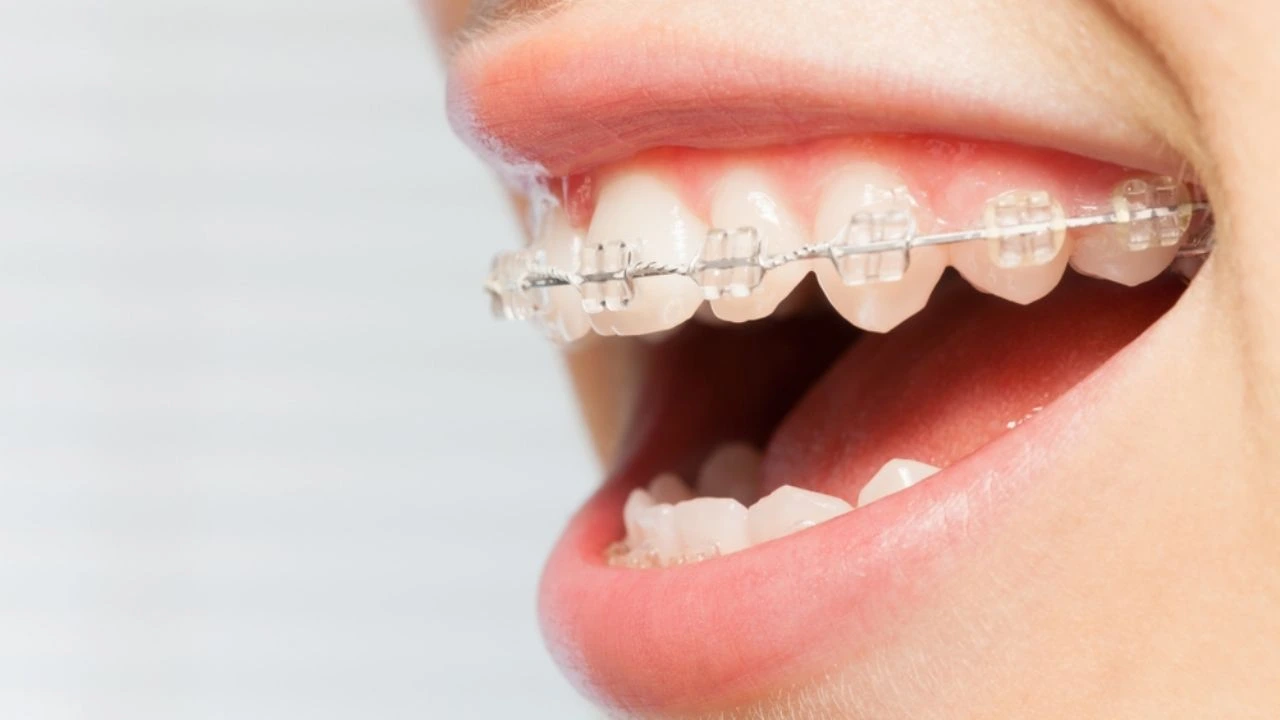
Practically never. Swiss basic health insurance (OKP/mandatory insurance) covers orthodontic treatment only for severe jaw or facial malformations with disease status, or for recognised congenital birth defects. For the vast majority of children’s braces, parents pay themselves — unless they hold supplementary dental insurance, which must be taken out early, ideally before the child’s 3rd–4th birthday. (Source: KPT, Insurando)
We have extensive experience with expat families — and the Swiss insurance system often works differently from what they know from home: unfortunately, orthodontic costs are covered only in rare cases, for example certain severe congenital conditions. That is why we recommend taking out supplementary dental insurance early — the timing matters, as the next section explains. Through our cooperation with CONCORDIA, an insurance consultation even comes with a CHF 20 voucher of your choice — whether or not you decide to sign up. For an overview of our full orthodontic services, see our orthodontics page.
Before your child’s 3rd–4th birthday — while insurers still accept applications without a dental certificate. After that, most providers examine the child’s dental status: if a misalignment is already visible, they may reject the application or exclude orthodontics from the policy. On top of that, waiting periods of 6–18 months apply before the insurance pays any benefits. (Source: Insurando, Beratungs-Zentrum)
Timing is a common and costly mistake parents make with children’s braces in Switzerland: waiting until the dentist identifies a misalignment usually means it is too late for full insurance cover. The sensible approach is to take out supplementary dental insurance in the toddler years. Which policy suits your family is best decided through an independent comparison; as a dental practice we do not recommend any specific insurer, but we do support you with transparent treatment estimates for submission to your insurance.
At Smilezone in Zug, external children’s braces (brackets) start at around CHF 3,000. For context: fixed braces in Switzerland typically cost CHF 5,000–15,000 depending on severity and treatment duration, with clear aligners up to CHF 8,000. The exact price depends on an individual assessment.
| Treatment | Price |
|---|---|
| External children’s braces (brackets), Smilezone Zug | from approx. CHF 3,000 |
| Material costs, fixed braces | approx. CHF 100–500 |
| Fitting the brackets | CHF 300–1,600+ |
| Clear aligners (straightforward–moderate cases, aligner team) | typically CHF 4,000–8,000 incl. retainer (practice figure); complex cases via orthodontics |
| Fixed braces overall (Swiss market) | CHF 5,000–15,000, depending on severity and treatment duration |
All prices are «from CHF» guide values; the final amount depends on the misalignment, treatment duration and chosen system, and is set out in a detailed written estimate after the initial examination. For a full comparison, see our page on braces and aligner costs.
The waiting period (Karenzfrist) is the time between signing a supplementary insurance policy and the moment it starts paying benefits. For dental plans in Switzerland this is 6–18 months, depending on the insurer. If orthodontic treatment begins within this period, the insurance pays nothing — another reason to take out cover early, long before braces become concrete. (Source: KPT, Insurando)
In practice this means: even parents who sign up before the certificate age should factor in the wait. Up to a year and a half can pass between signing and the earliest possible claim. Families who take out supplementary insurance in the toddler years have long cleared the waiting period by the time orthodontic treatment becomes relevant at school age.
Once a misalignment has been diagnosed or is visible, insurers treat it as a pre-existing condition: a new application is usually rejected, or orthodontics is excluded from the policy. In that case, parents generally carry the treatment costs themselves. A detailed written estimate then gives you certainty about the full cost of treatment before you commit. (Source: Insurando, Beratungs-Zentrum)
This is no reason to postpone a treatment that makes sense — with a transparent estimate, the costs can be planned reliably. In an initial consultation at Smilezone we discuss the findings, the treatment options and the expected costs before you decide anything. And if there are younger siblings: for them, taking out insurance early is all the more worthwhile.

A first orthodontic assessment makes sense at around 7 to 9 years of age. At this age, jaw and tooth misalignments can be identified early. For certain misalignments — such as a crossbite or a narrow upper jaw — early treatment can make later correction easier. The first dental visit itself belongs much earlier, between 1.5 and 2 years of age.
An early check-up does not mean treatment starts immediately: often it is enough to monitor development. But it gives parents clarity — including for insurance planning. You can read more on our children’s braces page.
“The best time to take out supplementary dental insurance is long before braces are even a topic. Parents should be able to focus on their child’s smile — we are happy to look at the insurance question together, calmly, during the first consultation.” — Dr. med. dent. Seung-Woo Yoo, specialist in orthodontics
Only in narrowly defined exceptional cases: for recognised congenital birth defects — specific inborn jaw and facial malformations — costs may be covered by the disability insurance (IV) or, today, partly through basic health insurance. Ordinary tooth and jaw misalignments do not qualify. Whether such an exception applies is determined during the clinical examination. (Source: KPT, Beratungs-Zentrum)
For parents this means: do not plan around IV or basic-insurance cover — it applies to a small minority of clearly defined diagnoses. If a congenital defect is suspected, we clarify this as part of the examination and support you with the documentation your insurer requires.
Three things determine how your child’s braces are financed: taking out supplementary dental insurance early (before age 3–4), attending the orthodontic check-up at around 7 to 9 years, and obtaining a transparent written estimate before treatment starts.
Yes — that is exactly the right time. Before the 3rd–4th birthday, insurers generally require no dental certificate, and the 6–18-month waiting period will be long over by the time treatment becomes relevant at school age. Later, you face certificate requirements, rejection, or exclusion of orthodontic benefits. (Source: Insurando, Beratungs-Zentrum)
As a dental practice, we do not recommend a specific insurer. Compare independently: what percentage of orthodontic costs is covered, up to what maximum amount, and with what waiting period? Independent comparison services and advisory centres can help you choose. We support you with a detailed written estimate for submission to your insurer.
The pure material costs of fixed braces are around CHF 100–500. Fitting the brackets adds CHF 300–1,600 or more, depending on the effort involved. The total price of external children’s braces typically starts at around CHF 3,000 in the Swiss market — the exact amount is set out in the individual written estimate you receive from Smilezone before treatment begins.
At Smilezone, clear aligners for straightforward to moderate cases typically cost CHF 4,000–8,000 including the retainer (aligner team: Fernanda Moreira and Dr. Florence Junes); complex cases are handled by our orthodontics department. You receive a binding cost breakdown after diagnostics — no unpleasant surprises.
Signing up may still be possible, but the insurer will now require a dental certificate. If no misalignment is visible, your chances are better; if one is already apparent, expect rejection or exclusion of orthodontic cover. Also factor in the waiting period of 6–18 months. Independent advice will clarify your options. (Source: Insurando)
As a rule, no. Mandatory basic insurance (OKP) only pays for severe jaw or facial malformations with disease status and recognised congenital defects — a small minority of cases. Ordinary misalignments are a private matter, or a matter for supplementary dental insurance. (Source: KPT, Insurando)
The Swiss Association of Paediatric Dentistry recommends a first dental visit between 1.5 and 2 years of age. Your child gets used to the practice early, and dental development is monitored from the start. The first orthodontic assessment follows later, at around 7 to 9 years.
An overview of our orthodontic services for children and adults is on our orthodontics in Zug page. Details on treating children — early treatment, process, types of braces — are on the children’s braces page; all prices compared on braces and aligner costs.
Arrange an initial consultation — referrals are welcome, and we are happy to advise you in English.